
Eco-friendly materials for your London home
A sustainable interior refurbishment means choosing materials with lower embodied carbon, healthier indoor air, and a longer lifespan. For London homes, the smartest eco-friendly choices are breathable insulation, low-VOC paints, reclaimed or FSC timber, and durable, repairable finishes that suit period properties and flats.
London homes have bags of character. High ceilings, original cornicing, those lovely sash windows—and, if we’re honest, a few draughts that could put out a birthday candle from across the room. When you’re planning a refurbishment, it’s the perfect moment to make your home not just beautiful, but kinder to the planet and healthier to live in.
But here’s the thing: sustainable refurbishment isn’t about slapping a bit of bamboo on the floor and calling it a day. It’s about making thoughtful choices across materials, insulation, and finishes that genuinely reduce your environmental footprint while standing the test of time.
At Nova Design and Build, we’ve refurbished plenty of Victorian terraces, Edwardian conversions, and modern flats across the capital. Below, we’ll walk you through the eco-friendly materials worth knowing about, where to spend, where to save, and how to avoid the greenwashing traps along the way.
What makes an interior refurbishment ‘sustainable’?
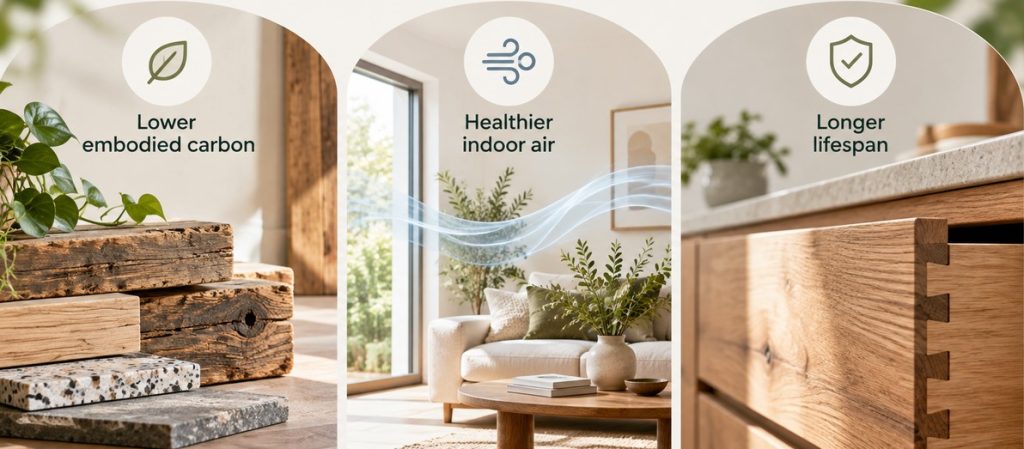
Before we dive into materials, it helps to understand what “sustainable” actually means in practice. It really comes down to three pillars.
- Lower embodied carbon. This is the carbon locked into a material through its manufacture, transport, and installation. Reclaimed and natural materials tend to carry far less of it than freshly manufactured, energy-intensive alternatives.
- Healthier indoor air. Many conventional paints, adhesives, and boards release volatile organic compounds (VOCs) long after they’ve dried. Low-tox finishes keep the air you breathe cleaner.
- A longer lifespan. A material that lasts 30 years and can be repaired beats one that looks great for five and then ends up in a skip.
It’s worth quickly separating embodied carbon (the impact of the materials themselves) from operational carbon (the energy your home uses day to day). A truly sustainable refurbishment considers both—there’s no point installing a beautiful reclaimed floor if the room haemorrhages heat all winter.
The London-home reality check
Here’s where things get interesting. London’s housing stock is old, and older homes behave differently from new builds.
Period properties were built to breathe. Solid brick walls, lime mortar, and timber floors all allow moisture to move through them naturally. Wrap them in the wrong modern materials and you can trap that moisture, which leads to damp, mould, and some very unhappy timber. We’ve seen it more times than we’d like.
Flats bring their own quirks—party walls, sound transfer between neighbours, and ventilation that’s often an afterthought. The lesson? An “eco” material is only as good as its suitability for your specific home and how well it’s installed. Breathability and moisture management aren’t nice-to-haves in a London refurbishment. They’re essential.
Eco-friendly materials for home renovation: a room-by-room guide
Let’s get to the good stuff. Here’s how to make smarter, greener choices across the key areas of your home.
Walls and ceilings
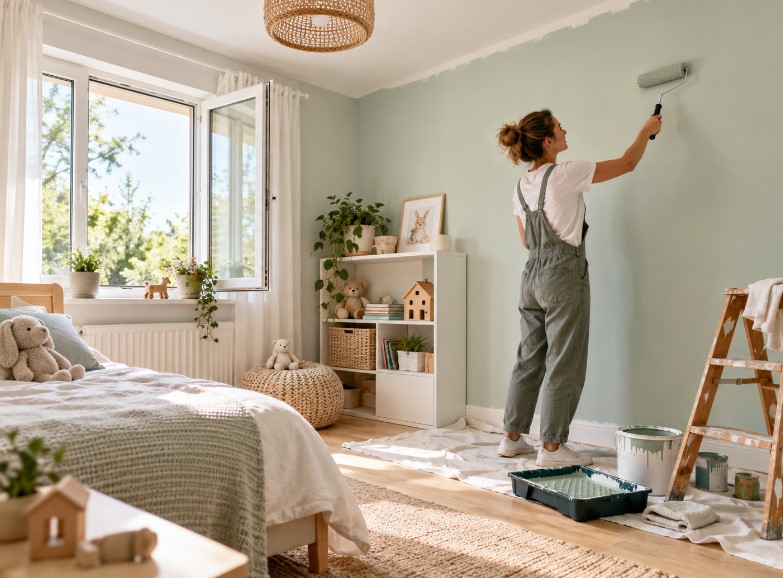
Low- and zero-VOC paints are one of the easiest wins going. They cost a touch more than standard emulsion, but the improvement in air quality is noticeable—especially in bedrooms and children’s rooms. Look for clear VOC ratings on the tin rather than vague “natural” claims.
For older homes, lime or clay plaster is a brilliant, breathable choice. It regulates humidity and lets solid walls do what they were designed to do. Just bear in mind it takes longer to apply and cure than gypsum, so factor that into your timeline.
Insulation that actually works in London homes
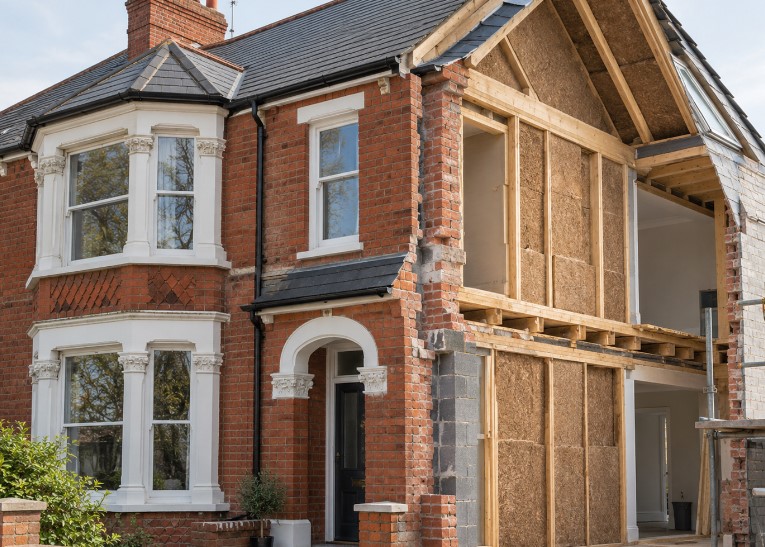
Insulation is where you’ll get the biggest bang for your sustainability buck—but material choice matters enormously.
- Wood fibre insulation comes in dense boards that suit solid walls beautifully. It slows heat transfer and stays breathable, which is why it’s a firm favourite in Victorian and Edwardian homes.
- Sheep’s wool insulation is remarkably forgiving. It absorbs and releases moisture without losing thermal performance, making it ideal for lofts and between joists.
- Cork performs well thermally and acoustically, and it’s naturally moisture and pest resistant—handy for ground floors and flats where sound between neighbours is a concern.
Whatever you choose, pair it with proper ventilation. Insulating without a plan for airflow is the classic way to create a mould trap.
Flooring with a lighter footprint
Reclaimed timber brings genuine character and near-zero embodied carbon, since it’s already been made. If you’re buying new, look for FSC- or PEFC-certified timber to ensure it comes from responsibly managed forests.
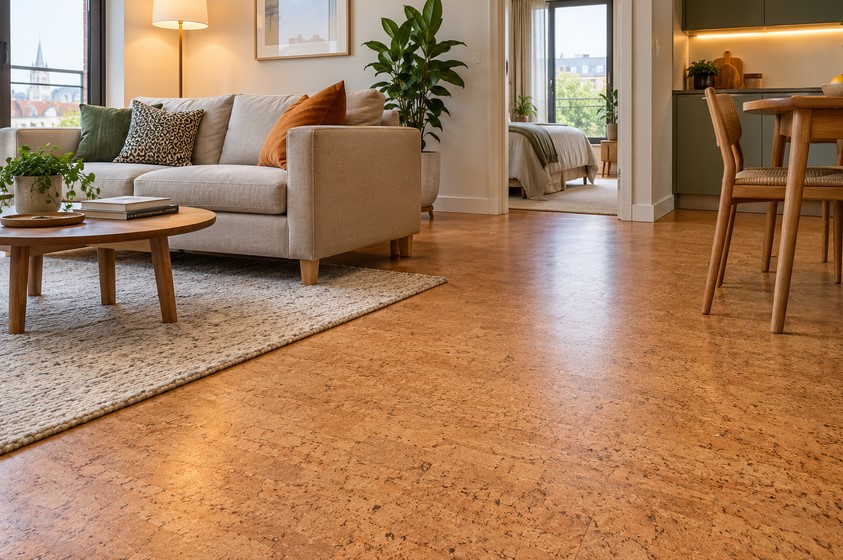
Cork flooring deserves a special mention for flats—it’s warm underfoot, quiet, and harvested from cork oak bark without felling the tree. And don’t confuse true linoleum (made from linseed oil, cork dust, and jute) with vinyl. They look similar but couldn’t be more different environmentally.
Kitchens and bathrooms
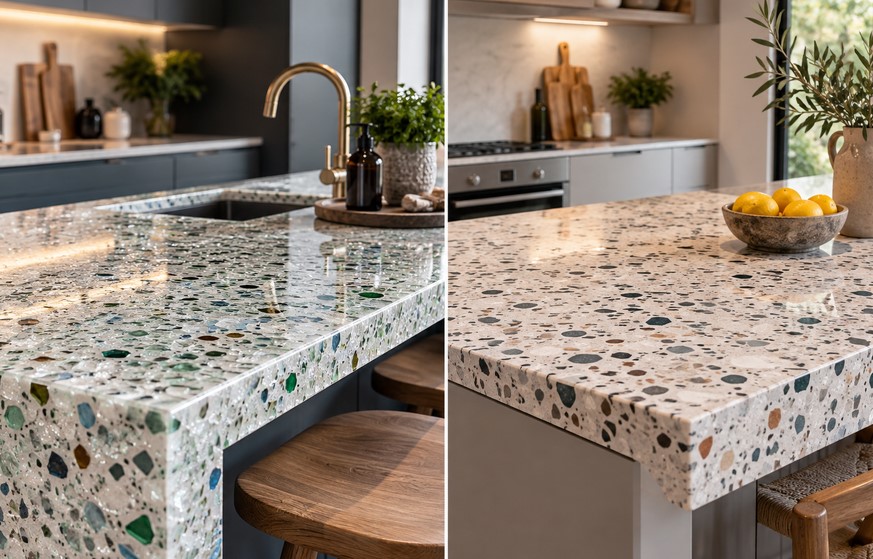
These rooms get the most scrutiny and the most footfall, so durability is key.
- Worktops: recycled glass composites and recycled-content terrazzo look stunning and give waste materials a second life.
- Cabinetry: choose FSC plywood or low-formaldehyde boards, finished with hard-wearing, repairable surfaces.
- Fittings: low-flow taps and showers reduce water use without any noticeable drop in performance.
How to spot greenwashing
Not every “eco” label deserves your trust. A few red flags to watch for:
- Vague terms like “green” or “natural” with no certification to back them up.
- No clear information about where a material comes from or what it’s made of.
- Claims that sound too good to be true—because they usually are.
Certifications such as FSC and PEFC for timber, or clear VOC ratings for paint, give you something concrete to rely on. When a product’s story is transparent, that’s a good sign. When it’s all fuzzy buzzwords, be cautious.
Budget-smart swaps that won’t blow the fund
You don’t need an unlimited budget to refurbish more sustainably. These high-impact, cost-aware upgrades punch well above their weight:
- Draught-proofing and airtightness detailing—cheap, quick, and transformative for comfort and bills.
- Insulation where it delivers best ROI, typically the loft and any solid external walls.
- Low-VOC paint throughout, since you’re decorating anyway.
- Reclaimed or FSC timber for visible, hard-working surfaces.
- Repairable finishes over throwaway ones—your future self will thank you.
Not sure where to prioritise? That’s exactly the kind of thing we help homeowners work out.
Our approach to sustainable refurbishment in London
We keep things refreshingly simple. It starts with listening—understanding your home, your goals, and any constraints like planning rules or party walls. From there, our design phase focuses on material selection, layout, and buildability, so nothing looks good on paper but falls apart on site.
During the build, every project gets a dedicated project manager and a team of trusted trades who care about the details. And because renovations always throw up the odd surprise, we pride ourselves on clear communication and sensible problem-solving when they do.
Whether it’s a full refurbishment, a kitchen or bathroom, a loft conversion, or an extension, we’ll help you build something that’s beautiful, comfortable, and genuinely kinder to the planet.
Frequently asked questions
What are the best eco-friendly materials for a period property in London?
Breathable materials win here. Think wood fibre or sheep’s wool insulation, lime plaster, and reclaimed timber. These work with solid walls rather than against them, reducing the risk of trapped moisture and damp.
Are low-VOC paints really worth it?
Yes. They cost slightly more but noticeably improve indoor air quality, particularly in bedrooms and spaces used by children. It’s one of the simplest sustainable upgrades you can make.
Is reclaimed wood always more sustainable than new timber?
Usually, since reclaimed wood carries almost no new embodied carbon. That said, if reclaimed isn’t available or suitable, FSC- or PEFC-certified new timber is a strong, responsible choice.
What insulation is best for solid walls without causing damp?
Wood fibre is a popular choice because it’s breathable and lets walls manage moisture naturally. Pair any insulation with adequate ventilation to avoid condensation problems.
How can I make a kitchen refurbishment more eco-friendly without compromising on style?
Choose recycled-content worktops, FSC plywood cabinetry, and water-saving fittings. These deliver a high-end look while lightening your footprint—no compromise required.
Do eco-friendly materials cost more, and where should I spend first?
Some cost a little more upfront, but they often last longer and reduce running costs. If budget’s tight, spend first on insulation, draught-proofing, and low-VOC paint for the best return.
Can you manage the whole project from design to build?
Absolutely. We offer end-to-end support—consultation, design, execution, and the final reveal—with a dedicated project manager guiding you throughout.
Ready to refurbish more sustainably?
A greener refurbishment gives you a home that’s healthier to live in, more comfortable year-round, and built to last—all while treading a little lighter on the planet.
If you’re planning a project and want to explore your options, we’d love to chat. Book a free survey and speak with our experts about your full refurbishment, kitchen, bathroom, loft conversion, or extension. Let’s create something you’ll love for decades to come.