
There’s a particular kind of gloom that sets in around late October, isn’t there? One day you’re eating lunch in daylight, and the next you’re switching on lamps at 3.30pm and wondering why your living room suddenly feels like a cave. If you live in a period terrace, a north-facing flat, or a home with one stubbornly small window doing all the work, you’ll know this feeling well.
We spend a lot of our time at Nova Design & Build London helping homeowners fix exactly this problem, and the good news is that you don’t need to knock your house down to sort it. Some of the best fixes are simple. Others involve proper refurbishment work. This guide walks through both, so whether you’re after quick wins this weekend or planning a bigger renovation, you’ll know how to maximise natural light in your home and keep it feeling bright right through the darkest months.
Why homes feel darker in a British winter (and it’s not just the paint colour)
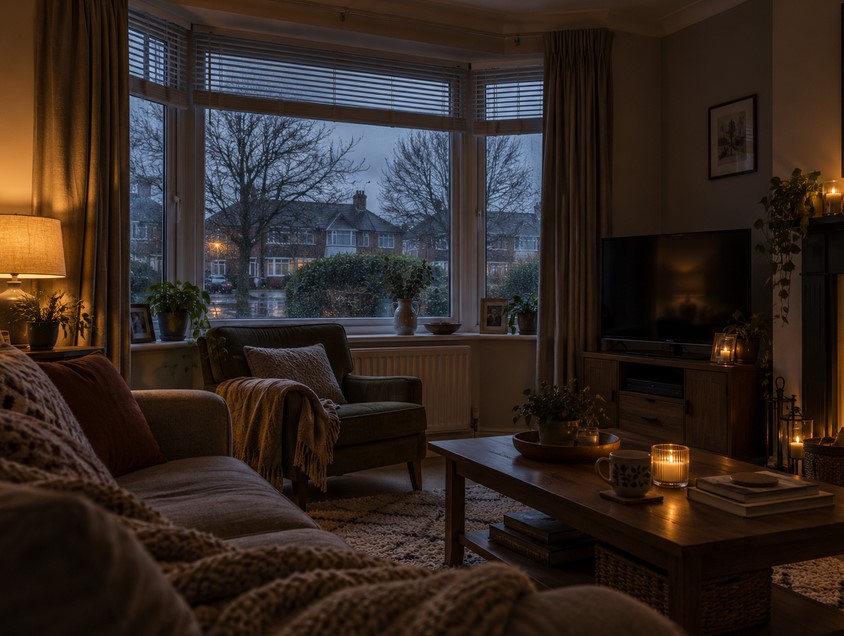
Blame the sun. In winter, it sits low in the sky, skies are more often grey than blue, and we lose several hours of daylight compared to summer. That’s before we even factor in the quirks of British housing stock.
Many of the homes we work on are Victorian or Edwardian terraces with narrow footprints, deep-plan layouts, and hallways that seem almost designed to hoard light rather than share it. North-facing rooms, overshadowing from next door’s extension, or a tree that’s grown a bit too enthusiastically can all make matters worse. Add tired, single-glazed windows or heavy curtains left over from a previous owner, and it’s no wonder some rooms feel permanently dim.
The point is, dark rooms usually have a specific, fixable cause. Once you know what’s blocking the light, you can decide whether a quick fix will do or whether it’s worth tackling as part of a proper refurbishment.
Quick wins before you start knocking down walls
Before we get into the bigger structural stuff, here are a few changes that cost little and take an afternoon, not a fortnight.
Let the windows do their job
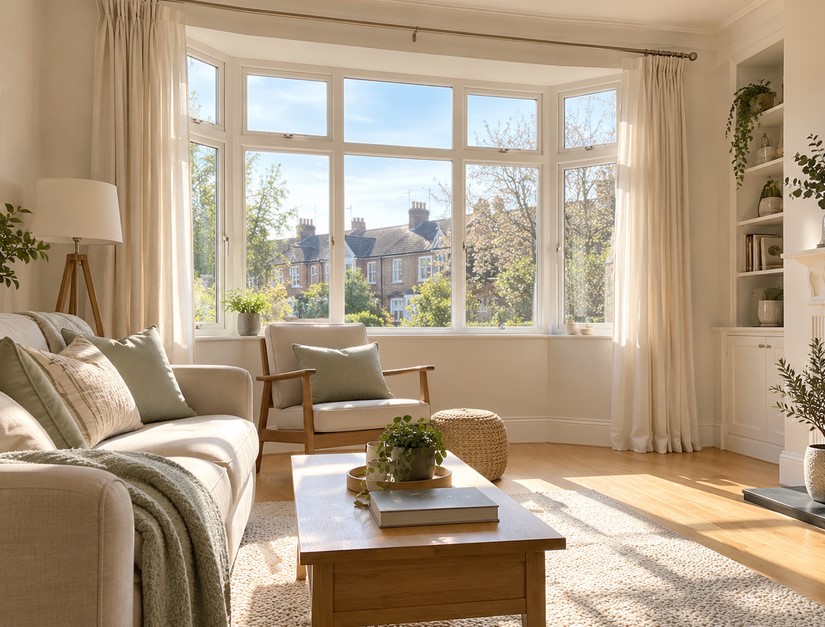
It sounds obvious, but clear your windowsills. Stacks of books, plant pots, and general clutter block more light than you’d think. Give the glass an actual clean too. Swap heavy, dark curtains for sheers or lighter fabrics that let daylight filter through even when they’re closed, and hang curtain poles slightly wider and higher than the frame so you’re not blocking any glass when they’re open.
Use finishes that bounce light (without turning your home into a dentist’s waiting room)
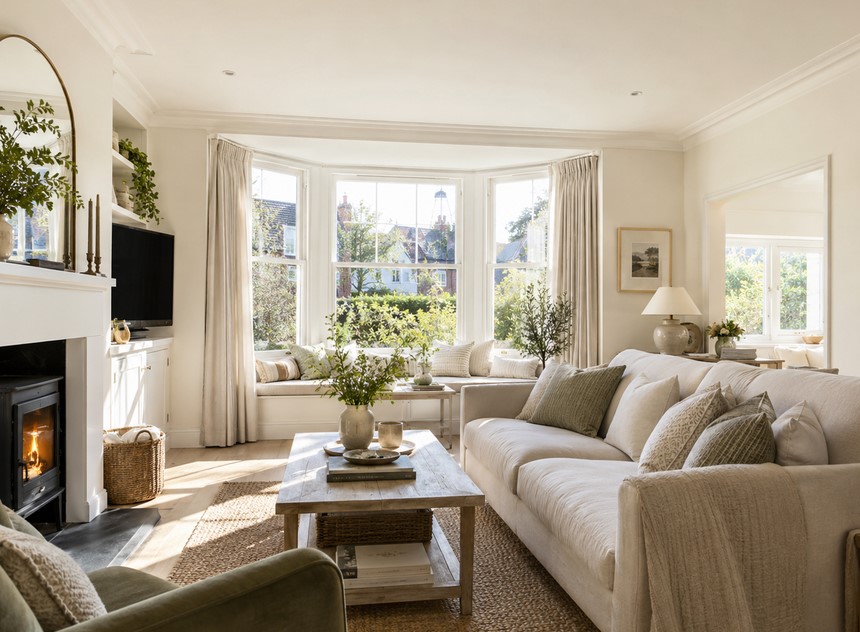
Light, warm off-whites on walls and ceilings reflect far more daylight than deep, saturated colours. You don’t need to repaint the whole house stark white though; that can feel a bit clinical, especially in a British winter when you want a space to feel cosy too. A soft neutral with a hint of warmth tends to do the job while still feeling inviting. Satin finishes reflect slightly more light than flat matt, and a touch of gloss on skirting or trim can help too, used sparingly.
Mirrors and reflective surfaces (done properly)
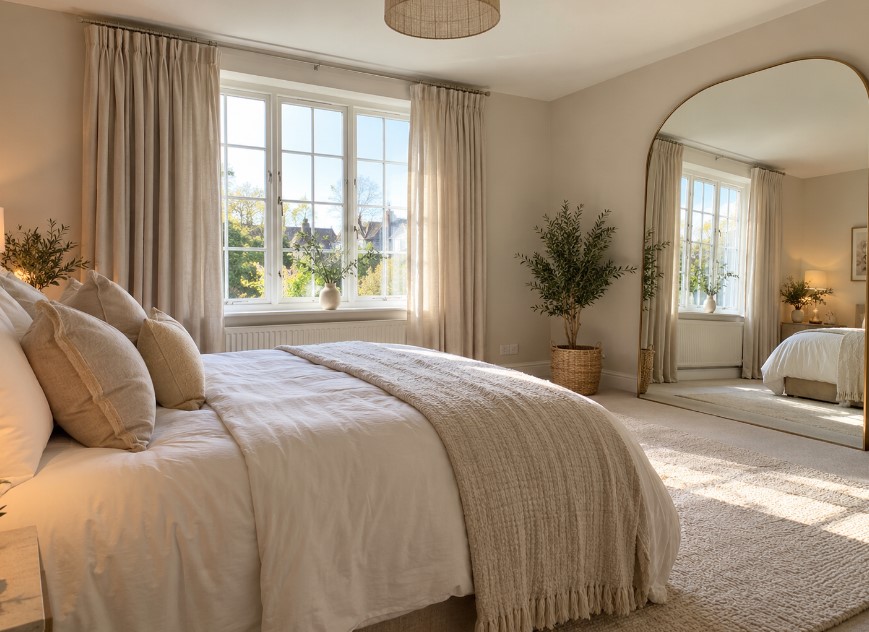
Mirrors genuinely work, but only if they’re placed well. Position a mirror directly opposite a window, not facing a wall of clutter, and make sure it’s a decent size. A tiny mirror in a dark hallway won’t move the needle. Metallic accents on lamps, trays, or hardware can help too, bouncing what little light there is around the room.
These tweaks help with maximising natural light, but they can only do so much if the room’s layout or windows are working against you. That’s where a bit of refurbishment thinking comes in.
Interior refurbishment tips that genuinely increase natural light
This is where things get more interesting, and where we spend most of our time as a design and build team.
Rethink internal walls and doorways
Borrowed light, letting daylight travel from a bright room into a darker one through internal glazing, is one of the most underrated tricks in a refurbishment. A glazed panel above an internal door, a crittall-style screen between a hallway and a living room, or a half-height glazed partition can transform a dim corridor without losing the separation between spaces. We use this a lot in the full property refurbishments we carry out, particularly in period properties where knocking through entirely isn’t appropriate or desired.
Swap solid doors for glazed options
If a full glazed partition feels like too much, even switching a solid internal door for a glazed one, or adding a fanlight above it, can lift a dark landing or hallway considerably. It’s a small change with a surprisingly noticeable effect.
Open up the layout strategically
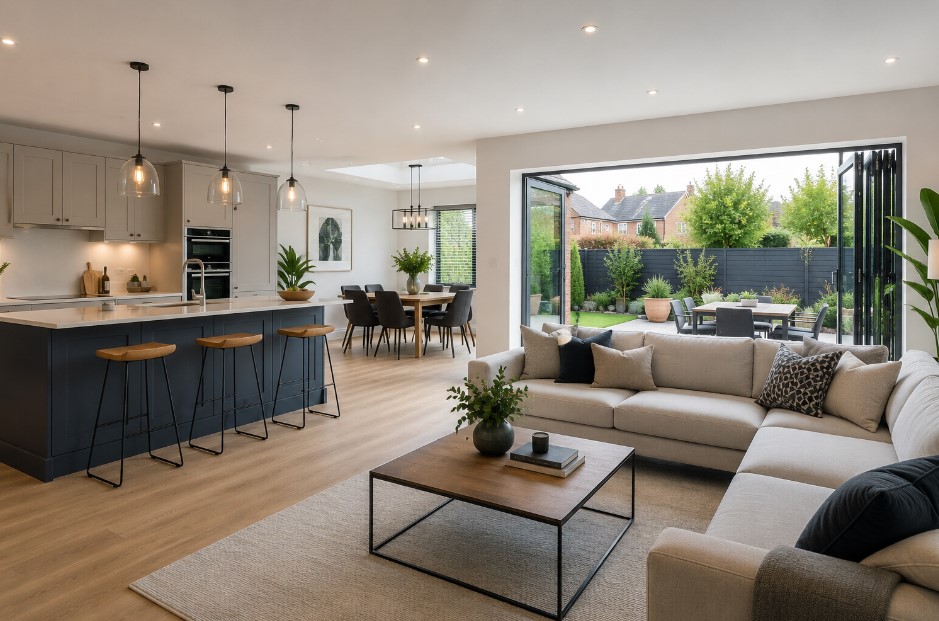
Full open-plan living isn’t right for every home, and we’d never suggest ripping out every wall just for the sake of it. But targeted changes, like opening up a kitchen into the dining space, or widening a doorway between a hallway and living room, can let light travel much further through a property. Where you’d rather keep some separation, zoning a space with flooring and lighting rather than a solid wall often achieves the same brightening effect.
This kind of interior refurbishment for more natural light tends to have the biggest visual impact of anything on this list, because it changes how light moves through the whole home, not just one room.
Window upgrades that brighten dark homes in the UK
Improve glazing and frames
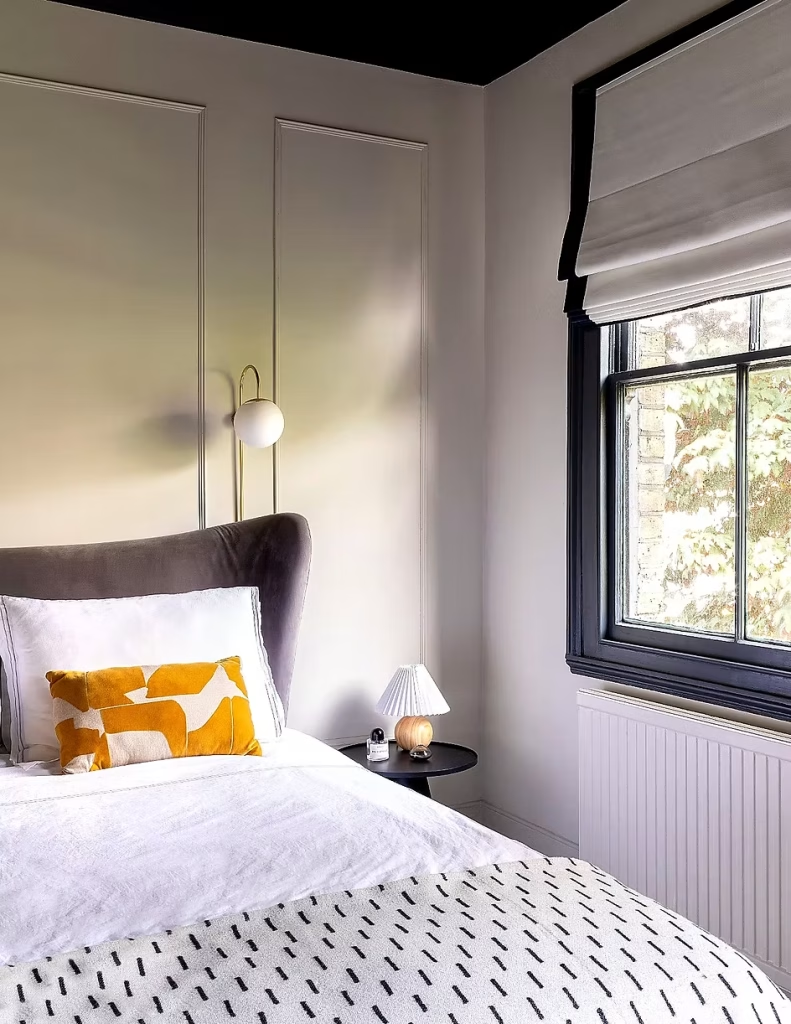
Older window frames are often bulkier than they need to be, eating into the glass area. Slimmer, modern frames can increase the amount of visible glass in the same opening, letting more daylight in without changing the size of the hole in the wall.
Consider changing window proportions
Where the structure and any planning constraints allow, taller windows or enlarged openings make a real difference, particularly on rear elevations or in extensions. Bay windows are also worth considering, as they capture light from three angles rather than one, which is especially useful in winter when every bit of light counts.
Keep warmth in while letting light in
We know the obvious worry here: bigger windows, more heat loss, higher bills. It’s a fair concern, but it’s less of an issue than it used to be. Modern glazing performs far better than what most period homes were originally built with, so you can generally increase glass area without your living room turning into a walk-in fridge every January.
Rooflight magic: the easiest way to “steal” daylight from the sky
Rooflights for extensions and rear returns
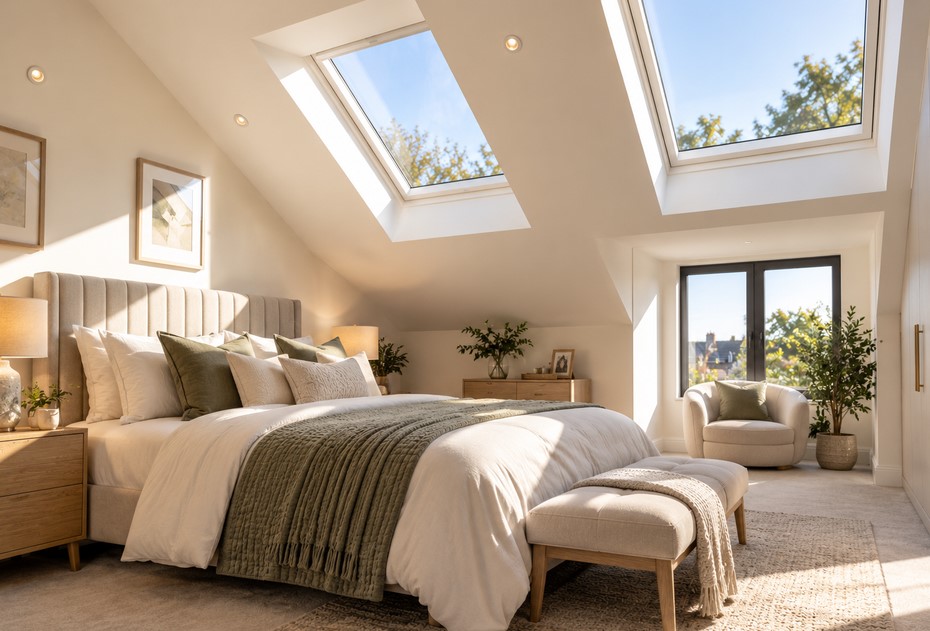
Here’s a fact that surprises a lot of clients: an overhead rooflight often brings in more usable daylight during winter than a much larger vertical window. Because rooflights face the sky rather than the horizon, they capture light for more of the day, even when the sun is sitting low. We often position them over kitchen worktops, dining tables, or circulation routes in rear extensions, exactly where the light gets used most.
Loft conversions that flood the top floor with daylight
Rooflights also tend to outperform dormer windows when it comes to natural light, largely because they’re angled towards the sky rather than set vertically into a dormer face. They’re generally simpler from a planning perspective too, and more cost-effective to install. If you’re weighing up a loft conversion, this is worth discussing early on, as it can shape the whole design.
Light-friendly design choices we build into refurbishments
Kitchen and bathroom moves that change brightness fast
Lighter worktops and splashbacks reflect far more light than dark stone or gloss black cabinetry. In bathrooms, swapping an opaque shower curtain for a glass screen, and choosing light-reflective tiles, can noticeably brighten a small space. It’s also worth checking that tall units or cabinetry aren’t sitting directly in front of a window, blocking light before it even gets into the room.
Flooring and soft furnishings that don’t swallow daylight
Pale timber tones and warmer neutral flooring reflect more light than dark boards or deep-toned carpets. You don’t have to sacrifice cosiness for brightness though; rugs and curtains in warmer, lighter tones can still make a room feel snug without darkening it.
The “visual light” trick: sightlines and clutter control
Even with perfect layout and glazing, a room can feel dark if the sightline from the window is cluttered. Keeping the path between the window and the rest of the room clear, and building in proper storage as part of a refurbishment, helps a space feel brighter and bigger even before you touch a single wall.
Planning and practical considerations
A quick reality check: if you’re in a conservation area or dealing with a listed building, enlarging windows or adding rooflights may need permission before you go ahead. Party wall matters can also come into play if you’re altering openings near a shared boundary. None of this should put you off, but it’s worth having the conversation with a specialist early, rather than discovering a hurdle halfway through a project. This is exactly the kind of thing we talk through during a free survey, so nothing catches you out later.
Mini checklist: your natural light action plan
This weekend (no building work required)
- Clear windowsills and give the glass a proper clean
- Swap heavy curtains for lighter fabrics
- Reposition a mirror opposite your main window
During a refresh (moderate disruption)
- Repaint in a light, warm neutral
- Update worktops, splashbacks, or tiles to lighter tones
- Swap a solid internal door for a glazed one
During a full refurbishment, extension, or loft conversion (bigger impact)
- Add internal glazing or a borrowed light panel
- Enlarge or reposition windows
- Install rooflights over kitchens, dining areas, or loft spaces
- Rework the layout to let light travel through the home
Frequently asked questions
What’s the quickest way to maximise natural light in a dark room?
Clear your windowsills, clean the glass, and swap heavy curtains for lighter fabrics. It costs almost nothing and makes a surprisingly noticeable difference within a day.
Do mirrors really work for brightening a room, or is that just Pinterest talk?
They genuinely work, but only when placed correctly. Position a decent-sized mirror directly opposite a window, not facing clutter or a blank wall, and you’ll see a real improvement.
Are rooflights worth it in winter in the UK?
Yes. Because they face the sky rather than the horizon, rooflights capture daylight for more of the day than vertical windows, which is particularly valuable when the sun sits low in winter.
Will bigger windows make my home colder or increase energy bills?
Not necessarily. Modern glazing performs far better than older single or early double glazing, so you can often increase glass area without a noticeable rise in heat loss.
Can I add internal glazing without going fully open-plan?
Absolutely. Borrowed light panels, glazed doors, and half-height screens all let light travel between rooms while keeping the rooms separate.
Do I need planning permission to change window sizes or add rooflights?
It depends on your property and location. Homes in conservation areas or listed buildings often need permission, while other changes may fall under permitted development. We’d always recommend checking this before starting work.
What changes add the most value while improving daylight?
Rooflights in extensions and loft conversions tend to offer the best combination of impact and value, closely followed by opening up key sightlines between rooms.
How do you approach natural light during a full property refurbishment?
We look at how light moves through the whole property, not just room by room. That means considering window positions, internal glazing, rooflights, and layout together, so every change works with the others rather than against them.
Ready for a brighter home?
If you’re tired of fighting the winter gloom and want a home that feels brighter without losing its warmth and character, we’d love to help. Whether that means a few carefully chosen layout tweaks or a full property refurbishment, extension, or loft conversion designed around natural light, our team can guide you through it from that first idea to the final reveal.
Book a free survey with us today, and let’s talk about how to maximise natural light in your home this autumn and winter.