
Look down. Beneath your floorboards lies the most untapped potential in your entire property. Basements are having a massive moment right now, offering homeowners a brilliant way to add significant square footage, boost property value, and upgrade their lifestyle without the heartache of moving.
But let’s set expectations early. A basement conversion is absolutely brilliant, but it is not a weekend DIY project fueled by a rented dehumidifier and boundless optimism. Transforming a dark, damp cellar into a stunning living space requires serious engineering, meticulous waterproofing, and a solid grasp of local planning rules.
In this comprehensive basement conversion guide, we will walk you through the typical costs, structural realities, and UK planning rules you need to know. Whether you want a cosy home cinema or a sprawling guest suite, understanding the journey is the first step. And if you want to skip the guesswork entirely, you can always book a free survey with Nova Design & Build to sanity-check your feasibility and budget from day one.
What counts as a basement conversion?
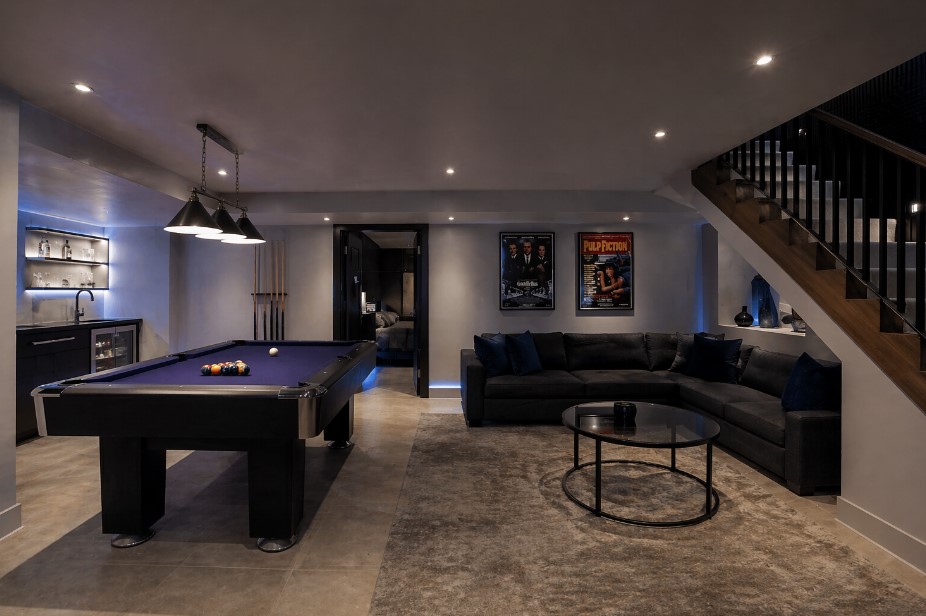
Before you start picking out paint colors, you need to know what kind of space you are actually working with. In the UK, basement projects generally fall into a few distinct categories.
Common conversion types
- Existing cellar conversion: This is the absolute best-case scenario. You already have the headroom and the space; you just need to make it habitable.
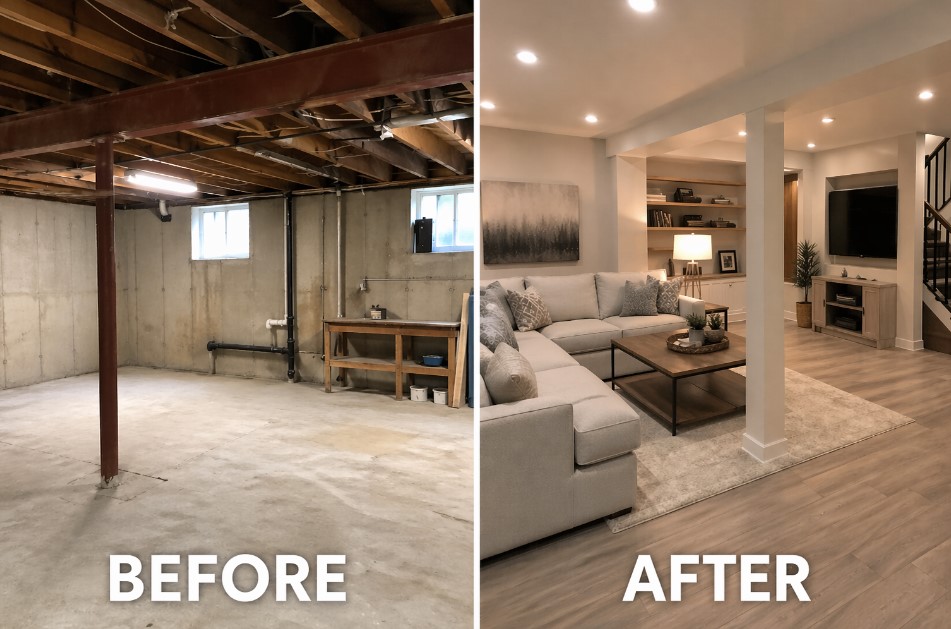
- Basement refurbishment: This involves taking an existing, poorly finished basement and upgrading it with proper dry-lining, new layouts, and modernised services.
- Lower-ground extension or excavation: This means digging down to create new basement space or increase ceiling height. Prepare for a bigger spend and heavy engineering.
- Lightwell additions: Digging out sections around the exterior to vastly improve daylight and create emergency escape routes.
If you are planning a basement renovation London style, you face a unique reality. Tighter footprints, complex party walls, and high council scrutiny mean you must plan incredibly carefully.
Best-use ideas for your new space
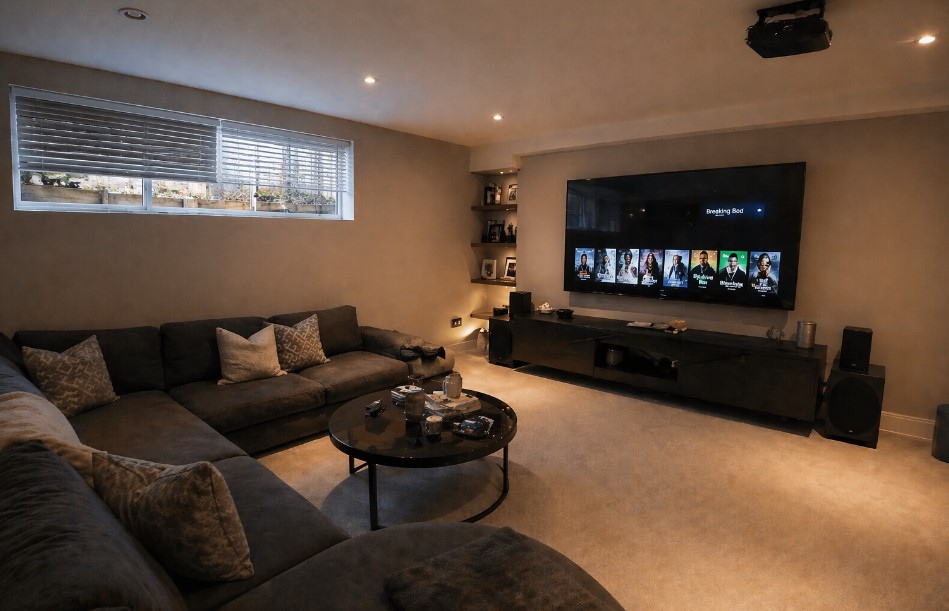
Nobody wants their new room to feel like a shoebox. With the right design, a basement can become the best room in the house. Popular choices include a guest bedroom with a sleek ensuite, a quiet home office (complete with proper ventilation so your Zoom calls don’t look like they are broadcast from a cave), or a dedicated cinema snug.
Home gyms and utility rooms are also fantastic uses for subterranean space. Nova Design & Build specialises in a high-end, tailored approach to ensure your new space perfectly aligns with your lifestyle.
Basement conversion costs in the UK
Let’s talk numbers. Providing genuinely useful cost ranges is tricky because every house is different, but understanding the cost drivers will help you budget effectively.
Typical cost ranges
A basic conversion of an existing cellar, where no structural changes are needed, is the most budget-friendly option. If you move up to a mid-spec conversion featuring a new bathroom, better finishes, and built-in storage, the price increases accordingly.
For a high-spec, luxury fit-out or a project requiring heavy excavation to create entirely new space, costs scale up significantly. Keep in mind that a basement renovation London tends to sit at the upper end of these estimates due to difficult site access, tricky logistics, and higher labor rates.
The real cost drivers
Why is it so expensive? Because it’s not just about slapping a plasterboard. Major cost drivers include your choice of waterproofing system and its guarantees. Structural design, such as heavy steelwork and underpinning, adds up quickly.
If you need excavation and muck-away services, restricted access will drive costs higher. Changing the ceiling height, lowering floors, installing a new staircase, and adding mechanical ventilation all require specialist trades. You also have to factor in plumbing for basement bathrooms, electrical upgrades, fire safety measures, party wall surveyor fees, and dedicated project management.
Budget planning tips
Spend your money on the boring essentials first. Waterproofing, ventilation, and structural integrity are non-negotiable. You can specify your luxury finishes later, but you must design your services early to avoid costly layout changes mid-build. Always build a sensible contingency fund into your budget—typically 15 to 20 percent. If you want transparent estimating, Nova Design & Build can provide a clear project roadmap after a free survey.
Structural considerations
Gravity is relentless. Before you fall in love with a specific floorplan, you need to run some strict feasibility checks.
Feasibility and foundations
Head height dictates almost all your options. You also need to consider your local soil type, groundwater levels, and the condition of your existing foundations. Party walls and neighboring structures are particularly crucial for terraced properties. Finally, think about access. How will massive machinery get in? How will tons of excavated soil get out?
Underpinning and support
If you need more headroom, you will likely need underpinning. This involves excavating below your current foundations and filling the space with concrete to strengthen the building’s base. It requires a skilled structural engineer and meticulous sequencing. You cannot simply knock out a supporting wall and hope for the best.
Basement waterproofing and damp control
Water always wins unless you design properly. You cannot skip this step. Typical approaches include tanking (applying a waterproof coating) or installing cavity drainage membranes coupled with drainage channels and sump pumps. Ensure your chosen system is maintainable and comes with a rock-solid warranty.
Ventilation and building regulations
To stop your new room feeling “basement-y”, invest in excellent mechanical ventilation, especially for bathrooms and gyms. Thermal insulation prevents condensation, while a smart lighting strategy using lightwells and layered fixtures mimics natural daylight.
Even if you do not need planning permission, Building Regulations almost certainly apply. You need official sign-off for structural safety, fire escapes, stair design, electrical compliance, and moisture protection.
Planning rules for basement conversions in the UK
Navigating local councils can feel like a maze, especially with London-specific wrinkles.
Do you need planning permission?
Converting an existing cellar into a living space often falls under Permitted Development, meaning no formal planning permission is required. However, exceptions always apply. You are much more likely to need planning permission if you are excavating to create new space, altering the external appearance with new lightwells, or if your property is a listed building or in a conservation area. Changes that impact your neighbors or the local streetscape will always trigger extra scrutiny.
The Party Wall Act
If you share a wall with a neighbor or plan to excavate near their foundations, the Party Wall etc. Act applies. You must serve notice and potentially hire surveyors to agree on the works. The best way to reduce friction is to communicate with your neighbors early and openly. Keep your timelines realistic; basements take significant planning and immense patience.
The step-by-step conversion process
Curious about what happens and in what order? Here is the typical roadmap:
- Initial consultation: Start with a free survey from Nova Design & Build.
- Feasibility checks: Assess head height, access, and constraints.
- Concept design: Map out the layout, lighting strategy, and specifications.
- Engineering: Lock in structural input and the waterproofing strategy.
- Permissions: Handle planning applications and party wall agreements if required.
- Detailed design: Finalise costs and the construction program.
- Construction phase: Enabling works, underpinning, waterproofing, first fix (plumbing/electrics), insulation, plastering, second fix, and commissioning.
- Sign-off: Building Control issues the final completion certificate.
- Aftercare: Receive maintenance guidance for your pumps and ventilation.
Choosing a contractor and mistakes to avoid
Don’t rely on luck when choosing a basement conversion company. Look for proven structural and waterproofing experience, clear project management, and transparent costing. Check independent reviews and demand quality craftsmanship. Nova Design & Build offers tailored designs, impeccable finishes, and a trust-led approach specifically suited for high-end renovations in London and the South East.
Mistakes to avoid
Learn from the mistakes of others. Never underestimate the complexity of waterproofing. Do not ignore ventilation, or you will end up with a room that smells like luxury damp. Avoid designing a layout before understanding your structural constraints, and never forget the logistical nightmare of muck-away access. Finally, skipping party wall steps or choosing the cheapest quote without comparing the actual scope of work will always end in tears.
FAQ
1. How much does a basement conversion cost in the UK?
Costs vary wildly based on scope, but range from modest sums for simple cellar upgrades to heavy investments for deep excavations.
2. Do I need planning permission/building regulations approval for a basement conversion in London?
If you are only converting an existing basement, often no. If you’re dealing with basement construction, excavating, altering the exterior, or live in a conservation area, yes.
3. How long does the basement conversion process take?
A simple conversion might take a few months, while a complex excavation can take six months to a year, including planning stages.
4. Will I need underpinning?
If you need to lower the floor to gain habitable ceiling height, underpinning is usually required.
5. What’s the best waterproofing method for a basement floor?
A cavity drain membrane system with a sump pump is widely considered the most reliable and maintainable solution.
6. Can I add a bathroom or kitchen in a basement?
Yes, absolutely. It just requires careful planning for plumbing and mechanical ventilation.
7. How do you add natural light to basement walls?
Lightwells, sun pipes, open staircases, and clever use of mirrors and layered artificial lighting.
8. What are the building regulations for basement conversions?
They cover fire safety, structural integrity, damp proofing, ventilation, and electrical safety. Compliance is mandatory.
9. How disruptive is a basement conversion while living in the property?
It is noisy and dusty, particularly during excavation. Good contractors will isolate the work area to minimise disruption to your daily life.
10. How do I get an accurate estimate for my basement design renovation?
Book a site survey with our specialist design and build team today to assess your specific property constraints.
Turning the unused into the unbelievable
A well-executed London basement conversion is a game-changer for your home. Your costs will ultimately depend on the complexity of the project, but structural integrity and robust waterproofing are absolutely non-negotiable. UK planning rules will vary based on your specific location and the scope of your ambitions.
The smartest move you can make is to secure professional feasibility input before committing to a final design or budget.If you are ready to explore the potential beneath your feet, contact Nova Design & Build. Book a free survey to get expert guidance on feasibility, structural needs, and planning. With our high-end design and build delivery across London and the South East, we can bring your vision to life. Get in touch today to start your journey.