
Let’s be honest. You love your area. You know the best barista by name, the commute is manageable, and you’ve finally figured out which paving slab on the high street is loose and squirts water on your trousers when it rains. But there is one tiny, nagging issue. Your house feels like it’s shrinking.
Maybe the “home office” is actually just the corner of the dining table. Perhaps the guest room is currently doubling as a storage unit for Christmas decorations and that exercise bike you swore you’d use. The logical step seems to be moving house. But have you seen the stamp duty rates lately? Moving is about as enjoyable as a root canal without anaesthetic.
At NOVA Design & Build, we specialise in a smarter alternative: looking up.
We are a high-end design and build company that turns dusty, spider-filled attics into stunning, architectural spaces. If you have a roof, you likely have a goldmine of square footage just waiting to be unlocked. But before you start ordering skylights and spiral staircases, you need to know what you’re dealing with. Not all lofts are created equal, and the type of conversion you choose dictates everything from headroom to planning permission.
What are the loft conversion types?
Navigating the world of construction can sometimes feel like learning a new language. To help you distinguish your dormers from your gables, here is a breakdown of the most common loft conversion types available to UK homeowners.
1. Dormer loft conversions
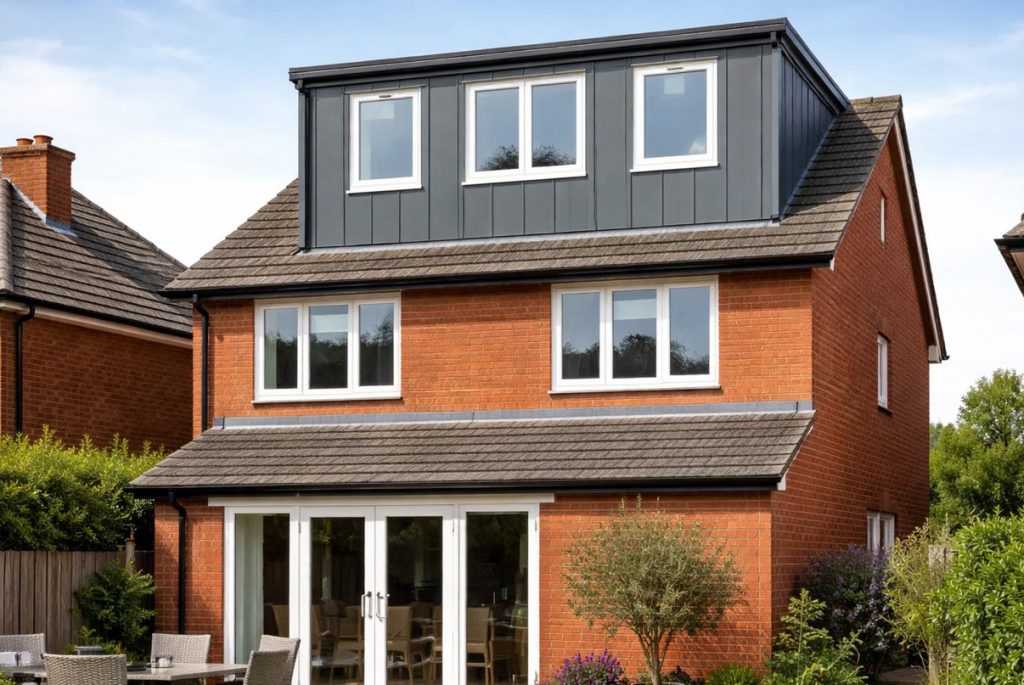
This is the bread and butter of the extension world. A dormer conversion involves a structural extension that projects vertically from the slope of the existing roof, creating a box shape.
While “box shape” might not sound terribly romantic, the result is fantastic. It creates walls that sit at a 90-degree angle to the floor, which means you get full headroom across a much larger area. No more walking around hunched over like you’re exploring a cave.
Best suited for?
Dormers are incredibly versatile and work on most property types, including terraced houses and semis. If your priority is maximising walkable floor space and headroom, this is usually the winner.
2. Hip-to-gable loft conversions
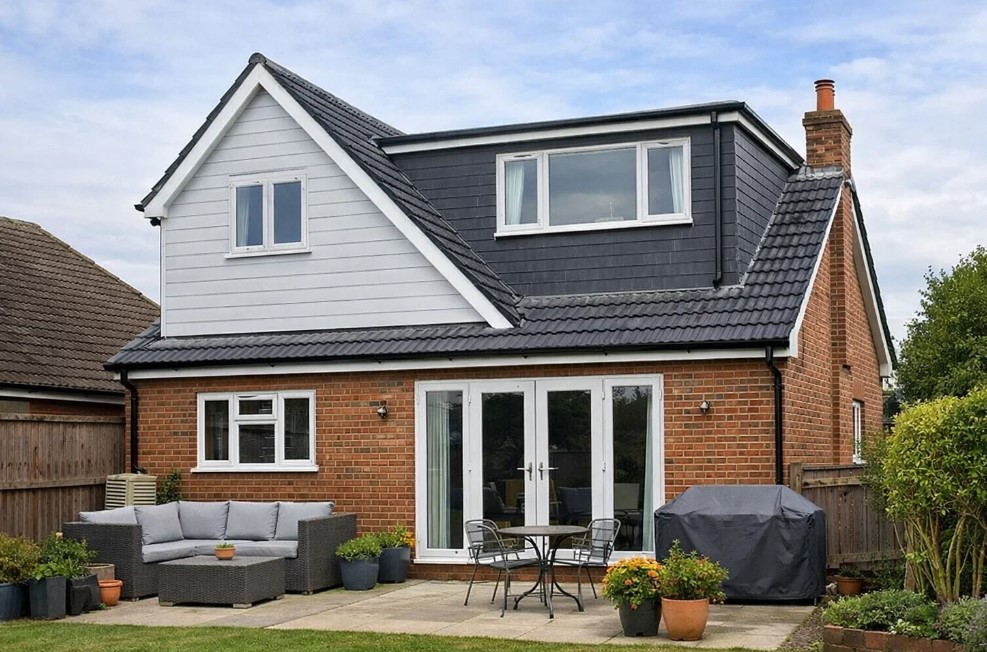
If you live in a semi-detached or detached house, you likely have a “hipped” roof. This is where the roof slopes down on the side of the house as well as the front and back. While it looks lovely from the street, it’s a nightmare for internal space.
A hip-to-gable conversion effectively straightens out that sloping side roof to create a vertical wall (the gable). This architectural gymnastics transforms the attic space, extending the ridge line to meet the outside wall.
Best suited for?
Owners of semi-detached or detached bungalows and chalets. It’s the perfect way to claw back space that the original roof design stole from you.
3. Mansard loft conversions
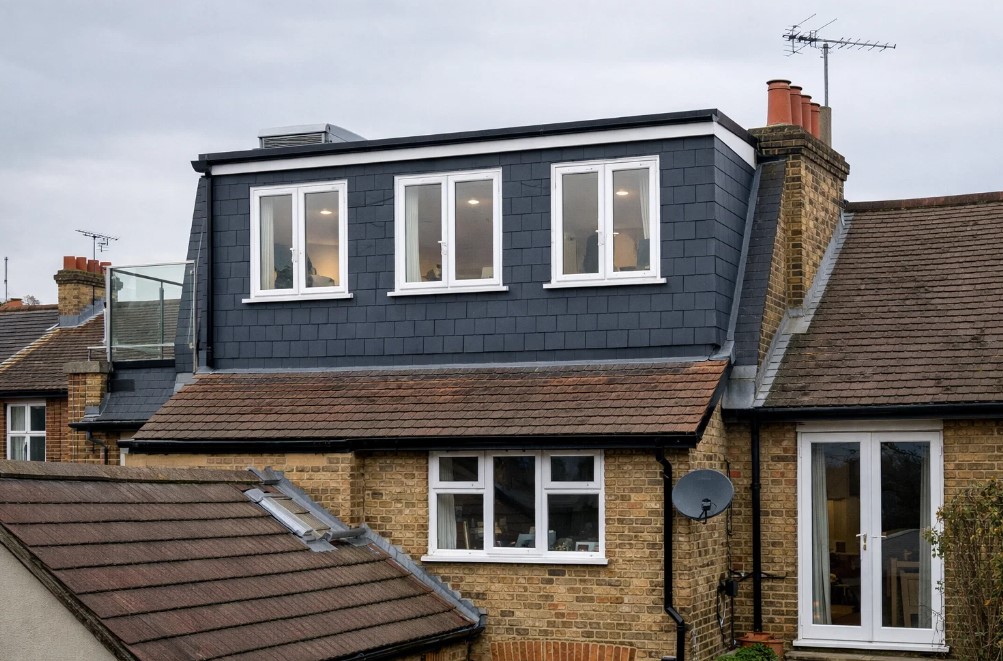
Named after the 17th-century French architect François Mansart (who clearly enjoyed a bit of flair), this is often considered the Rolls-Royce of loft conversions.
A Mansard conversion involves altering the entire structure of the roof to make it almost vertical—usually at a 72-degree angle. It essentially adds a whole new storey to your home rather than just “converting the attic.” They are often finished with stylish brickwork to match the existing property, blending in seamlessly.
Best suited for?
Period properties and townhouses in London. Because they are aesthetically pleasing and blend well with older architecture, planning departments often prefer them in conservation areas.
4. Velux loft conversions
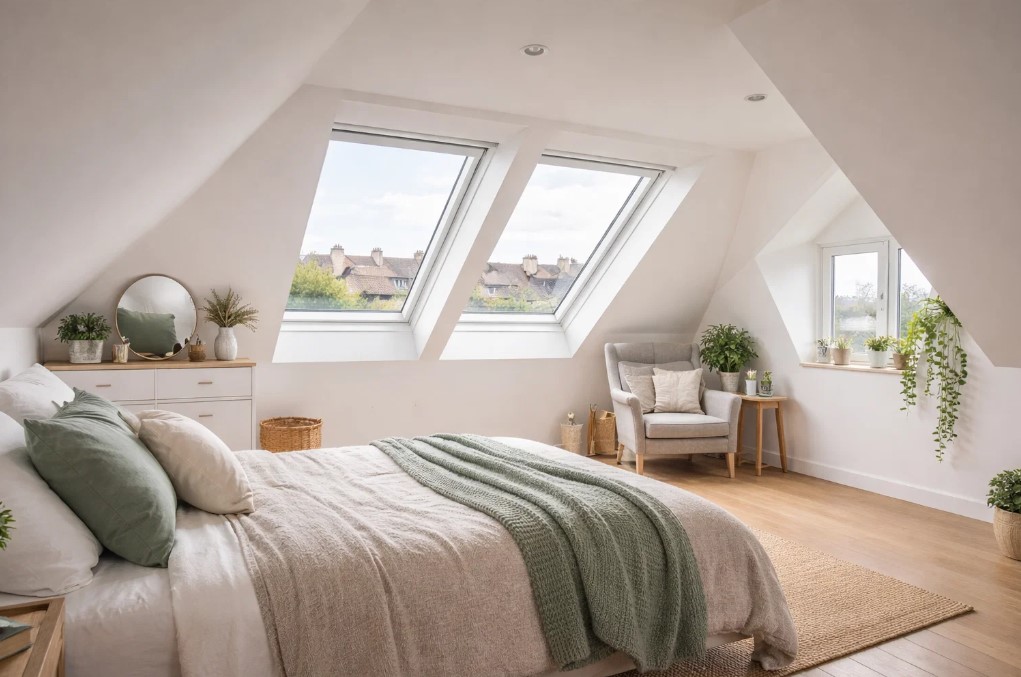
Sometimes, simple is best. Also known as “roof light” conversions, these are the least intrusive option. We don’t alter the shape of your pitched roof at all. Instead, we reinforce the floor, add insulation, a staircase, and install Velux windows flush with the roofline.
It’s quick, cost-effective, and maintains the original silhouette of your home. However, you do need decent head height in your existing loft for this to be viable.
Best suited for?
Those on a tighter budget or homeowners living in strict conservation areas where changing the roofline is a big no-no.
5. Bungalow loft conversions

Bungalow loft conversions are an excellent way to maximise unused space in a single-story home, transforming it into a functional and stylish living area. These conversions are particularly popular as they can dramatically increase the available living space without the need for larger extensions. Typically, bungalow loft conversions involve raising the roofline or adding dormer windows to ensure enough headroom and natural light, though the exact approach depends on the property and planning regulations.
Best suited for? Homeowners who want to add more space to a bungalow for growing families or additional functionality, such as guest bedrooms or home offices.
Loft conversion ideas for each style
Knowing the structure is one thing, but envisioning the lifestyle is another. Here are some loft conversion ideas UK homeowners are loving right now, tailored to each specific build.
Dormer conversion: The practical powerhouse
Because a dormer gives you flat walls and high ceilings, it is perfect for rooms where you need to stand up and move around.
- The executive home office: Finally, a Zoom background that isn’t your kitchen cabinets.
- The guest suite: Give your visitors their own bathroom so you don’t have to awkwardly queue for the shower in the morning.
- The teenage retreat: A space where they can play video games at max volume, comfortably far away from your living room.
Hip-to-gable conversion: The space creator
Since this conversion maximises floor space significantly, you can think big.
- The master suite: Think of a sprawling bedroom with a walk-in wardrobe.
- The entertainment hub: A cinema room or a dedicated lounge area. Because who says the TV has to be downstairs?
Mansard conversion: The luxury apartment feel
The near-vertical walls give a Mansard conversion a distinct “room” feel, rather than an “attic” feel.
- The multi-functional studio: Open plan living with zones for sleeping, working, and relaxing.
- The spa bathroom: We’re talking freestanding bathtubs, rainfall showers, and high-end finishes that make every day feel like a hotel stay.
Velux conversion: The light-filled sanctuary that preserves your existing roof structure
The angled windows in a Velux conversion let in beautiful natural light, making these spaces feel airy and ethereal.
- The creative studio: Perfect for painting, writing, or crafting.
- The reading nook: A cosy armchair under a skylight, surrounded by bookshelves.
- The plant paradise: Ferns and succulents love the light levels in these conversions.
Why expertise matters
You might be thinking, “Great, I’ll just get a ladder and a saw.” Please, put the saw down.
At NOVA Design & Build, we don’t just slap some plasterboard up and call it a day. We focus on bespoke, high-end renovations. We understand that a loft conversion isn’t just about adding square meters; it’s about adding value and joy to your home.
We handle the messy stuff—the structural calculations, the building regulations, and the project management—so you can focus on the fun stuff, like choosing Farrow & Ball paint colours. Our commitment to quality materials means your new floor won’t creak, and your insulation will keep you toasty in winter and cool in summer.
Frequently asked questions
Do I need planning permission/building regulations approval?
Not always. Many loft conversions, particularly simple Dormer and Velux styles, fall under “Permitted Development” rights. However, if you live in a conservation area, a listed building, or if you want a Mansard conversion, you will likely need full planning permission. We help navigate this bureaucratic maze for you.
How much does the average loft conversion cost?
It’s the classic “how long is a piece of string” question. Costs vary wildly depending on the size of the roof, the type of conversion, and the quality of the finish. A simple Velux conversion is the most affordable, while a complex Mansard will be at the higher end. We provide transparent, detailed quotes so there are no nasty surprises.
Will it add value to my home?
almost certainly. According to various property studies, a high-quality loft conversion can add up to 20% to the value of your property. It’s one of the best investments you can make in your home.
Ready to transform your loft space?
Your home has potential that is currently sitting above your head, gathering dust. Whether you dream of a sun-drenched master suite or a quiet office away from the household chaos, we can make it happen.
Don’t let the fear of construction put you off. With the right team, the process can be smooth, transparent, and—dare we say it—exciting.
Get in touch with NOVA Design & Build today. Let’s discuss how we can elevate your home, by utilising the untapped gold of your already usable space.